


Santiago Miranda is the co-founder of Superior Roofing and Restoration LLC, a locally owned and operated roofing company proudly serving Louisville, Shelbyville, and surrounding communities in Kentucky and Indiana.
The clearest signs of roof leak in attic spaces are a musty smell at the hatch, damp or flattened insulation, dark stains on the decking or rafters, rusty nail tips and daylight where there shouldn’t be any.
Your attic shows a leak long before your ceiling does, so it’s the best place to confirm one while it’s still a small roof repair and not a drywall job.
Before You Go Up
Bring a real flashlight, step only on joists or boards laid across them, and don’t crawl over insulation to reach a far corner. On our inspections, if we can’t reach a spot from a safe joist, we photograph it from where we stand. Do the same.
The Attic Check, From Hatch to Peak
The smell. A wet-towel smell at the hatch means something up there stays damp.
The insulation. Wet fiberglass goes flat and dark; blown-in insulation clumps or crusts. Sweep your light across the floor for the low, dark patch.
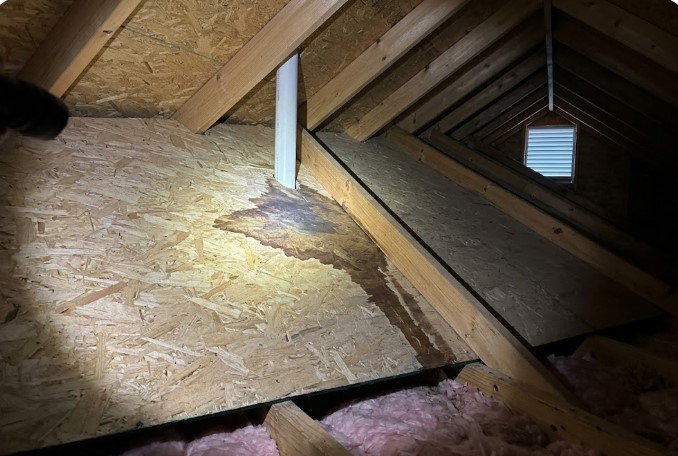
The stains. Dark rings with a hard edge, usually starting at something that goes through the roof.
Rusty nails. Point your light up. Roofing nails that stay wet rust and leave orange rings in the wood.
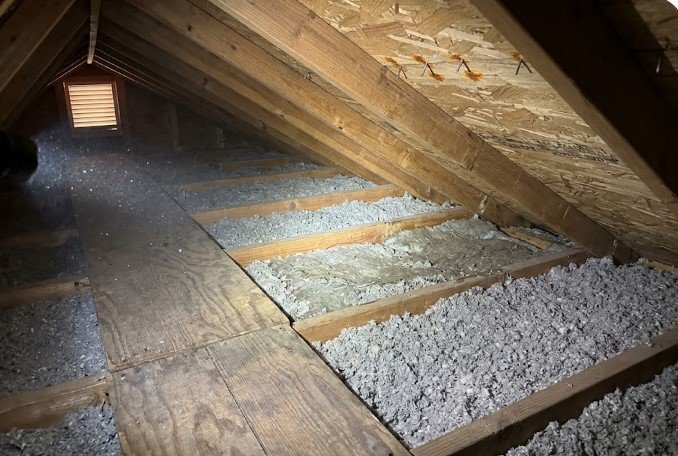
Mold and daylight. Fuzzy gray or black spots show where moisture lingers. Then switch your light off: daylight at the ridge vent is normal, but a pinprick beside a pipe or along a valley is not.
Where the Water Is Really Getting In
Almost every leak we trace starts at something that breaks through the shingles: a plumbing vent boot, chimney, skylight, roof vent or valley. Around Louisville, cracked pipe boots are the one we find most.
The stain is rarely right under the hole. Water slips under the shingles, hits the deck and runs downhill before it drips. So when homeowners ask me how to find a roof leak in the attic, I tell them to start at the lowest wet spot and follow the trail uphill until it stops.
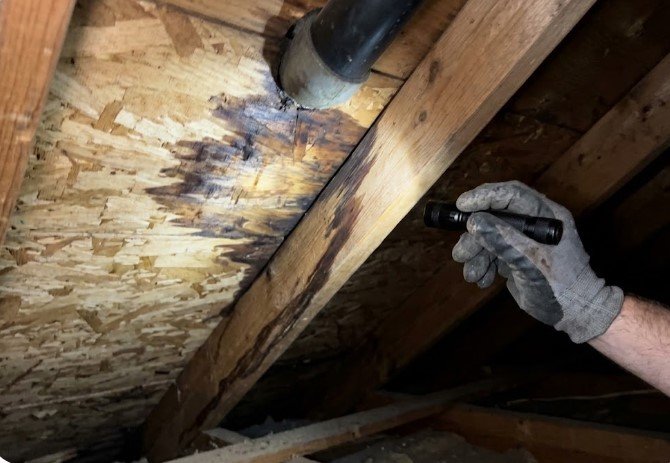
Before you climb down, check whether it’s active. An old stain is dry, faded and hard; an active one is dark and soft. Look during a steady rain or the morning after.
Back to That First Attic: What the Roof Showed Us
From the driveway, the roof over that first attic looked fine. So we went up and checked the pipe that stain led us to.
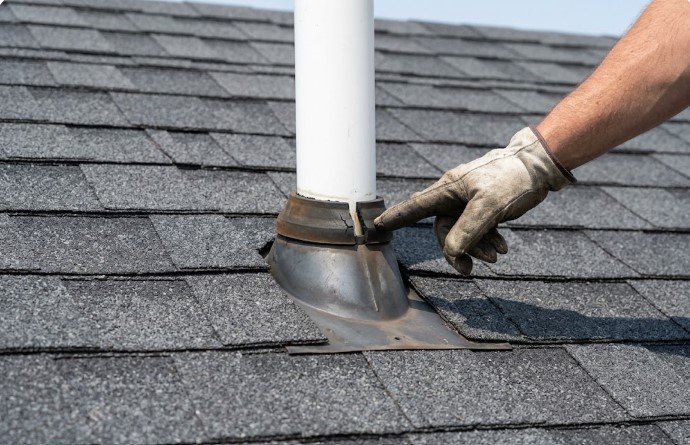
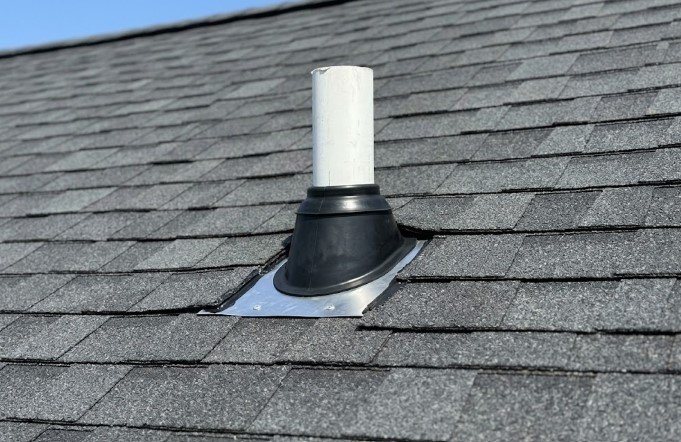
The shingles around it were sound, and the decking dried out without needing replacement. A new roof made no sense here. We pulled the old boot, slid a new one under the upper course of shingles, sealed the nails, and sent the homeowner photos and video from the attic and the roof.
Leak or Frost? The Call That Wasn’t a Leak
The attic condensation or roof leak question comes up every winter. On cold nights, damp air from the house rises into the attic and freezes on the nail tips and the underside of the deck. On a mild afternoon it melts all at once and drips like a leak.
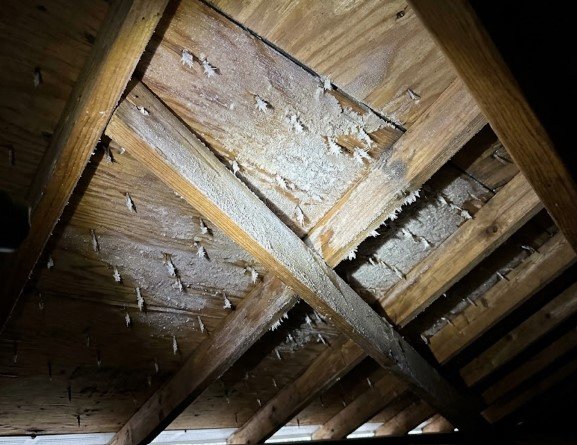
On that call, three things gave it away: the moisture covered the whole deck instead of one trail to a pipe or valley, it showed up on a dry day, and every nail tip was frosted, not just the ones near a stain.
Most attic moisture comes from household air leaking up through the ceiling. That homeowner’s fix was inside the house: sealing around the hatch and light fixtures and venting the bath fan outdoors. There was nothing on the roof to repair, and I told them so.
Found Something? Do This Tonight
Set a bucket on a board across the joists under any drip, and pull soaked insulation off the drywall. Take dated photos and video of the stain and the insulation. If the leak appeared after hail or high wind, those pictures support your claim, and the first storm damage steps you take make a difference. Then stay off the wet roof and call us.
FAQ
Is a small stain in my attic an emergency?
Usually not. A dry, faded stain may be an old, fixed leak. A dark, soft one is active, and wet decking keeps weakening and can grow mold, so get it checked soon.
Will homeowners insurance pay for a leak I found in the attic?
It depends on your policy and the cause. Sudden hail or wind damage is often treated differently from a boot that wore out with age. If a storm was involved, our storm damage restoration work starts with photos and video for your adjuster.
Can a roof leak if the shingles look fine?
Yes. The split boot in the photo above couldn’t be seen from the ground. Flashing, vents and nails backing out can all leak under perfect-looking shingles.
Should I replace wet insulation or let it dry?
Fiberglass that got wet once can dry if the leak is fixed fast and it fluffs back up. If it stays flat, stained or musty, or blown-in insulation has crusted, replace that section.
How often should I check my attic?
Twice a year: after a big spring storm, and on a cold winter morning to look for frost. Catching the signs of roof leak in attic framing early keeps the fix small.
Let Us Check Both Sides
If your attic showed you any of this, book a free inspection. We’ll check the attic and the roof above it, then send you photos and video of what we find, whether it’s a leak, frost or nothing at all. New clients who book a project also get a free annual roof checkup for three years.