


Santiago Miranda is the co-founder of Superior Roofing and Restoration LLC, a locally owned and operated roofing company proudly serving Louisville, Shelbyville, and surrounding communities in Kentucky and Indiana.
The most common signs of hail damage on a roof are dark, bruise-like spots where shingle granules have been knocked off, dented gutters and roof vents, and impact marks scattered randomly across the roof. Most of that damage can’t be seen from the driveway, so a roof that looks fine from the ground can still have real, claimable hail damage.
After every hailstorm we get the same call: “I don’t see anything wrong, but my neighbor’s getting a new roof.” More often than not, when we climb up, the hits are there. This guide walks through exactly what we look for: what you can check safely from the ground, what only shows up up close, and what to do next.
Ground-level signs of hail damage you can check safely
You can spot most of the evidence of hail without a ladder. If the softer metal and screens around your house took hits, your shingles almost certainly did too. Walk the property after the storm passes and check these:
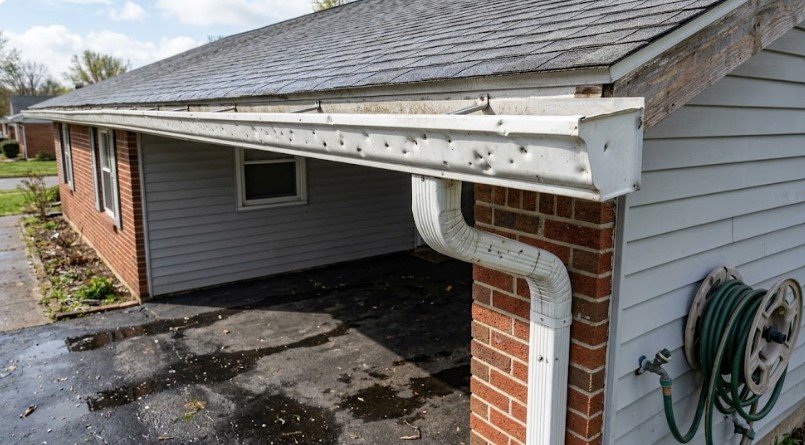
- Gutters and downspouts: small round dents or dimples along the front face of the gutter.
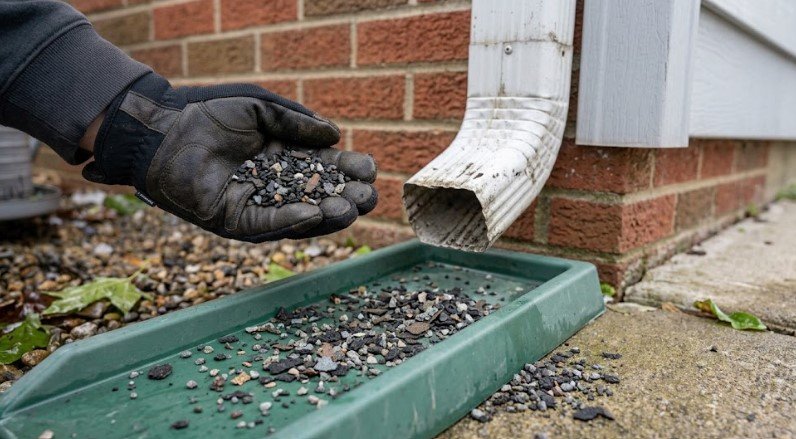
- Shingle granules: a pile of dark, sand-like grit at the downspout outlets or in the splash blocks.
- AC condenser: bent or flattened metal fins on the outdoor unit.
- Window screens: small tears or stretched spots in the mesh.
- Siding: chips, cracks or dents, especially on the side facing the storm.
- Metal flashing and vents: dings you can see from the yard on chimney flashing or roof vents.
- Mailbox, grill and patio furniture: fresh dents on anything metal left outside.
- Soft wood: fresh splatter marks or dings on decks, fences and window trim.
The granules are the one homeowners miss most. Those granules are the protective coating on your shingles. A little loss on a newer roof is normal, but a fresh handful at every downspout right after a storm means something knocked them loose.
What does hail damage look like on a roof?
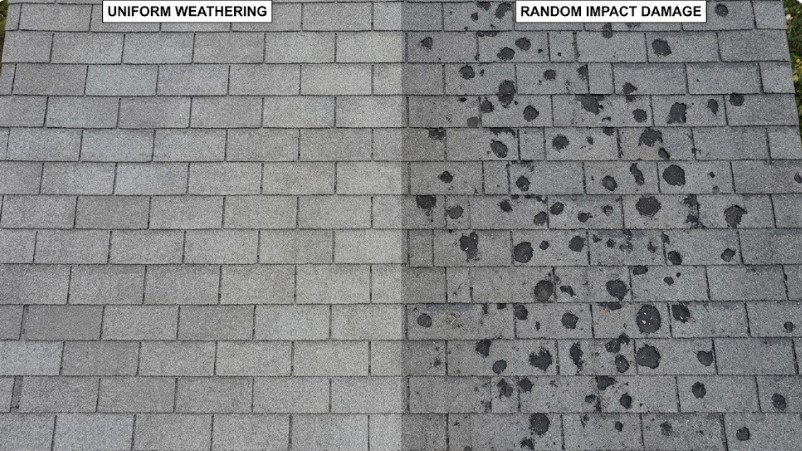
On an asphalt shingle roof, hail damage looks like dark, roughly round spots where the granules were knocked away and the black mat underneath shows through. Press on a fresh hit and it feels soft, like a bruise on an apple. That softness means the shingle mat itself is fractured, even if the surface looks intact.
When our crew walks a roof after a storm, we check for these:
- Bruises and granule loss: dark spots, usually from the size of a dime up to a half-dollar, depending on hail size.
- Soft spots: hits that give under light finger pressure.
- A random, scattered pattern: hail doesn’t land in neat rows, so the marks don’t either.
- Cracked or split shingles: larger hail can break the shingle outright.
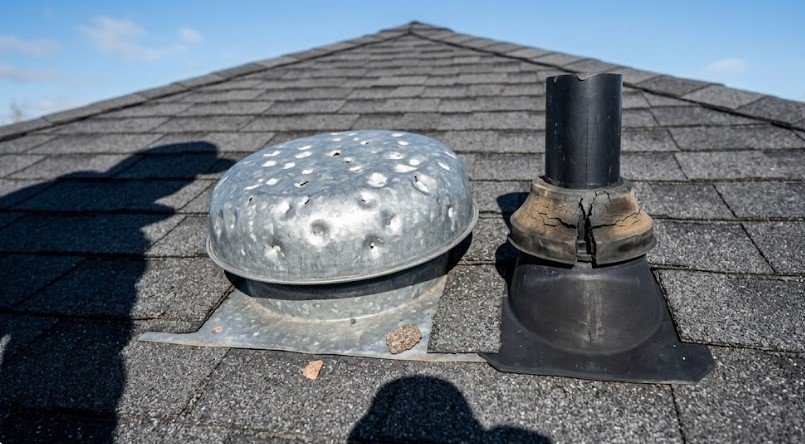
- Dented roof vents and flashing: metal on the roof shows hits clearly.
- Damaged pipe boots: the rubber collars around plumbing vents can crack and start leaking.

We also chalk a 10-by-10-foot “test square” on each slope and count the hits inside it. Adjusters use the same method, so a documented count gives your claim a clear starting point.
Not sure if your roof was hit? We’ll come out and take a look for free, and we photograph and document everything you need for your insurance claim.
Hail damage vs. normal wear: how roofers tell the difference
Hail damage is random and scattered, while normal aging is even across the whole roof. That one difference is how we, and the adjuster, separate a storm claim from an old roof. Blistering and manufacturing defects also get mistaken for hail, so it pays to know the tells.
| What you see | Hail damage | Normal wear | Blistering or defect |
|---|---|---|---|
| Pattern | Random, scattered across slopes | Even across the whole roof | Clustered in patches or one batch of shingles |
| Shape of the mark | Round or oval bruise | General thinning, no distinct marks | Raised bubbles or small pits with sharp edges |
| Feel | Soft spot that gives under pressure | Firm, may feel brittle | Firm; pops open when pressed |
| Granules | Knocked off in a spot, mat exposed | Worn smooth over time | Missing where the blister burst |
| Metal on the roof | Vents and flashing dented | No dents | No dents |
| Timing | Appears right after a storm | Builds over years | Often shows in the first few years |
If your vents and gutters are dented and the shingle marks are random, that’s hail. If the whole roof looks tired but nothing metal is dented, it’s more likely age.
Hail damage by roofing material
Hail damage looks different on every roofing material, and some materials hide it better than others. Asphalt shingles are by far the most common roof we see in Louisville, so that’s where most claims start.
| Roofing material | What hail damage looks like | Risk of hidden damage |
|---|---|---|
| Asphalt shingle | Dark bruises, granule loss, soft spots, cracks | High: bruises can be invisible from the ground |
| Metal | Dents and dimples in panels, chipped coating | Low to medium: dents show, but cosmetic vs. functional damage is debated |
| Wood shake | Fresh splits with sharp, light-colored edges, dents in the grain | Medium: new splits are easy to confuse with old ones |
| Tile (clay or concrete) | Cracked, chipped or broken tiles | Medium: broken pieces may slide under other tiles |
Interior warning signs of a hail-damaged roof
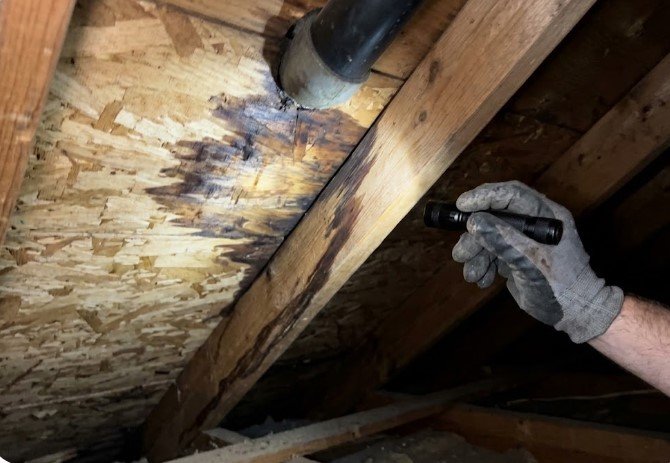
Inside your home, hail damage usually shows up as a leak, but often weeks or months after the storm. A fractured shingle or cracked pipe boot can hold for a while, then start letting water through during the next heavy rain.
Check these after a storm, and again after the next few rains:
- Water stains or dark spots on the attic decking
- Damp or matted insulation
- Water spots on boxes or anything stored in the attic
- Brown rings or bubbling paint on ceilings
- A musty smell upstairs
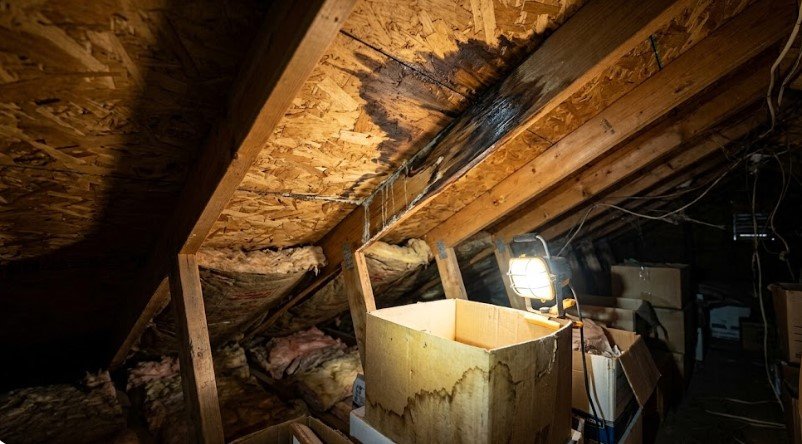
If you find any of these, take dated photos right away. Interior damage that ties back to the storm helps your claim.
What to do if you think your roof has hail damage
If you suspect hail damage, document what you can from the ground, stay off the roof, and get a professional inspection quickly. Kentucky’s spring storm season can bring several storms in a few weeks, and separating damage from one storm to the next gets harder the longer you wait.
- Stay off the roof. A wet or storm-damaged roof is slippery, and walking on bruised shingles can make the damage worse. We’d rather you call us than climb.
- Photograph everything from the ground. Take dated photos of dented gutters, granules at the downspouts, damaged screens, siding and your AC unit.
- Write down the storm date. Your insurer will ask for it. Local news or weather reports help confirm it.
- Cover active leaks. Put a bucket under drips and move valuables. If water is coming in, call for an emergency tarp.
- Schedule an inspection. A local roofer can confirm whether the damage is real and document it before you file.
- Watch out for storm chasers. After big storms, out-of-town crews knock doors, take deposits and disappear. Hire a licensed, insured company with a local address you can drive to.
After recent storms in Louisville, Shelbyville and Spencer County, our crew has usually been able to get out for inspections within a day or two. We’re a family business that lives here, so we’re still here when the warranty matters.
Storm just rolled through? Give Superior Roofing & Restoration a call and we’ll check your roof before the next round of weather hits.
Hail damage FAQs
What are the first signs of hail damage on a roof?
The first signs are usually on the ground, not the roof: dented gutters, dinged downspouts, bent AC fins and a pile of shingle granules at the downspouts. If those are present after a storm, your shingles likely took hits too.
Can you see hail damage from the ground?
Usually not. You can see dents in gutters, vents and siding from the yard, but shingle bruises are small and blend in from a distance. A close-up inspection is the only way to know for sure.
What size hail damages a roof?
Hail about 1 inch across, roughly quarter-sized, is generally where asphalt shingle damage starts. It’s also the size the National Weather Service uses as the severe threshold on the hail size scale. Smaller hail can still damage older or worn shingles, especially when strong wind drives it at an angle.
How long do I have to file a hail damage claim?
It depends on your policy. Most require prompt notice, and many set a firm deadline counted from the storm date. Check your policy or call your agent, and don’t wait until the next storm muddies which damage came from which.
Does homeowners insurance cover hail damage to a roof?
In most cases, yes. Standard homeowners policies typically cover hail as sudden storm damage. Your payout depends on your deductible, whether you have replacement cost or actual cash value coverage, and your roof’s age.
Should I get an inspection if I’m not sure my roof was hit?
Yes. A free inspection costs you nothing and tells you whether you have a claim before you call your insurer. If we don’t find storm damage, we’ll tell you that too.
Can hail damage cause leaks later on?
Yes. Fractured shingles and cracked pipe boots often hold for weeks or months, then start leaking during heavy rain. That’s why getting an inspection soon after the storm matters, even if nothing is dripping yet.
Get a free hail damage inspection in Louisville
If a storm rolled through and you’re not sure whether your roof was hit, let us take a look. Superior Roofing & Restoration provides free hail damage inspections across Louisville, Shelbyville, Taylorsville and Spencer County, and Southern Indiana. We document everything you need for your claim and give you a straight answer.