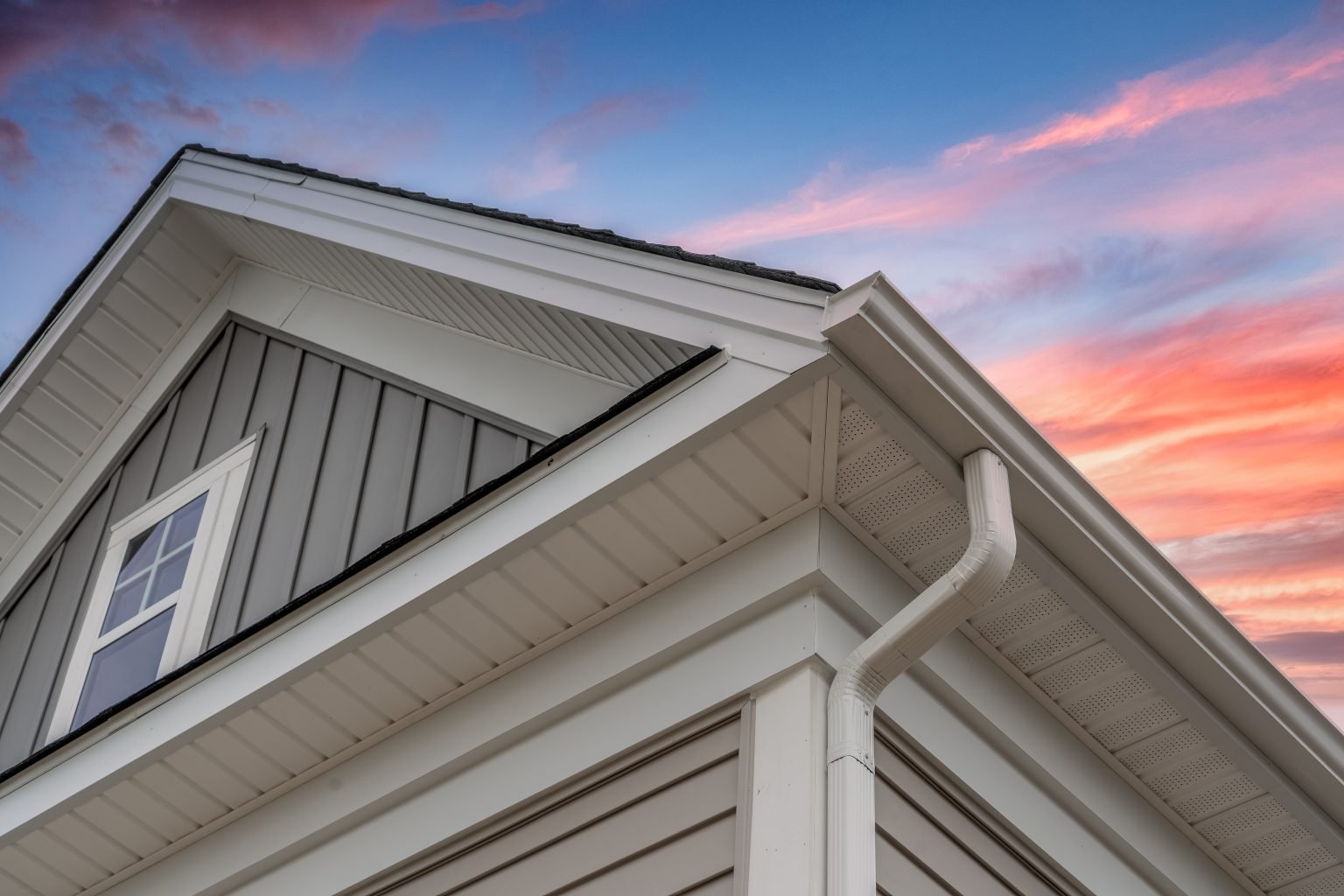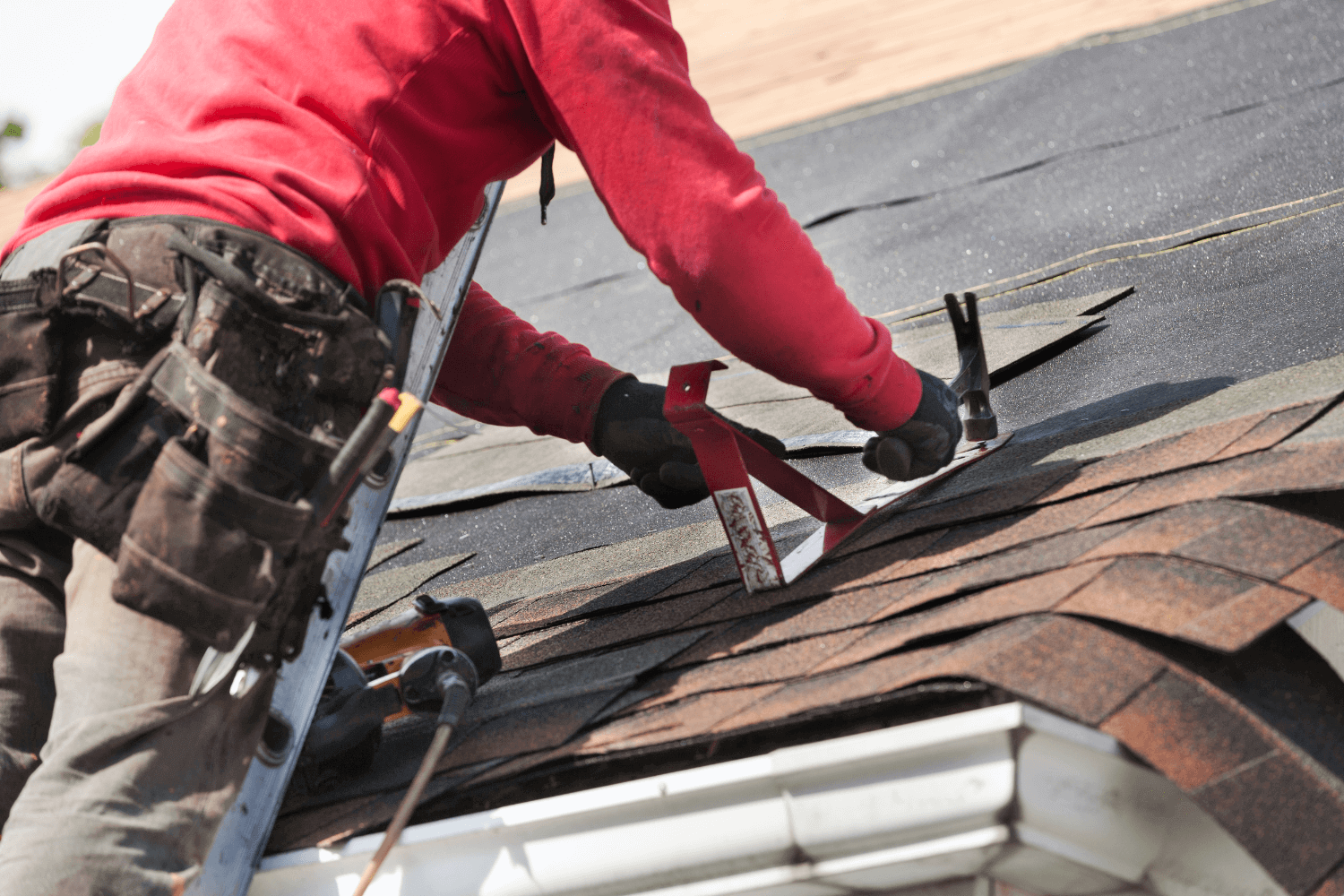


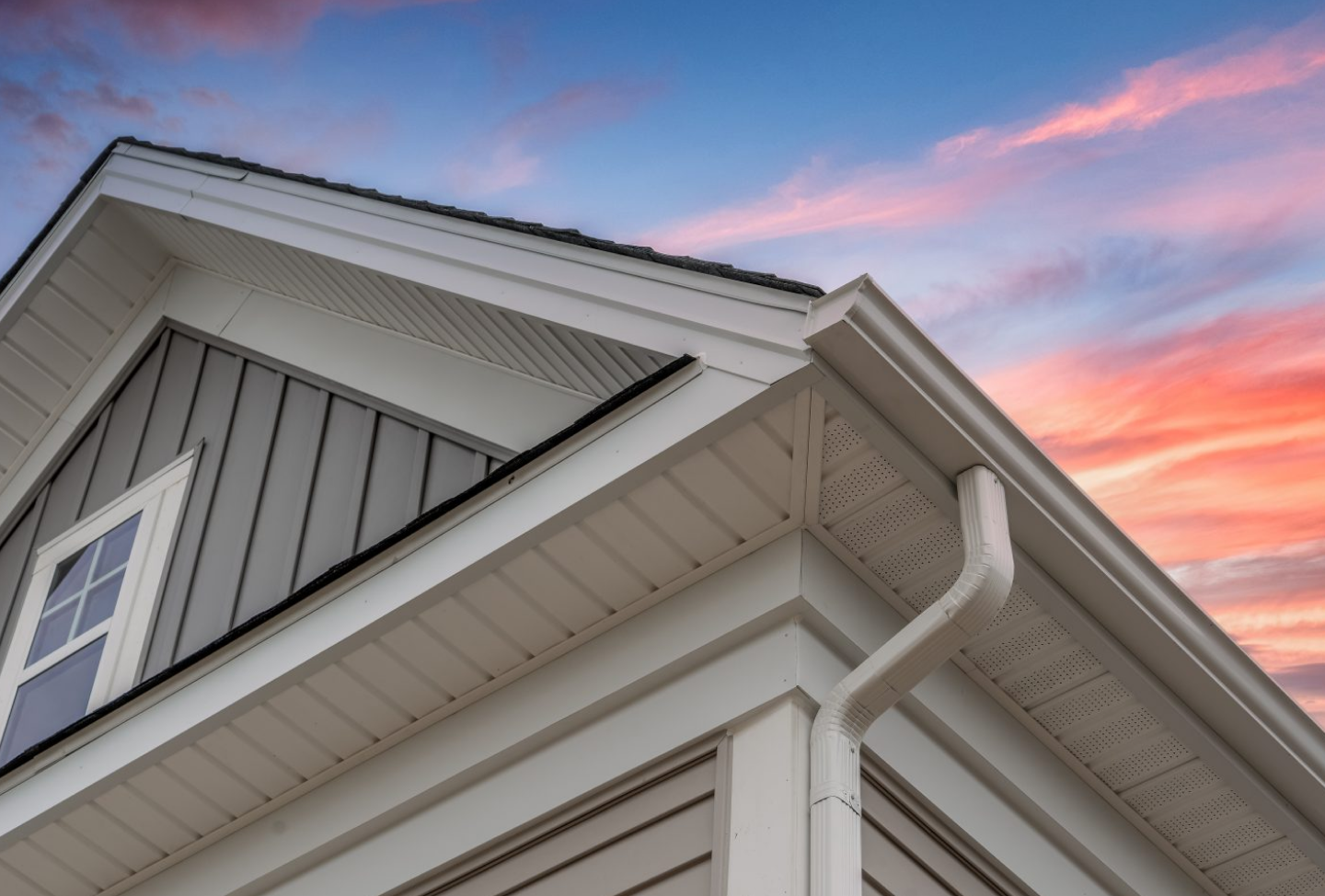
If you’re pricing seamless gutters cost in Louisville, you’re probably trying to answer two questions at once: “What will this run me?” and “Do I really need to replace gutters now?” Fair. Gutters aren’t exciting—until a small leak turns into basement flooding or foundation damage.
This guide breaks down gutters cost, the typical gutter installation cost per foot, which gutter material makes sense for the local climate, and the clearest signs of gutter failure.
Average cost: seamless gutters per linear foot (and whole-home totals)
In 2026, seamless gutter installation is commonly priced per linear foot (also written as per linear foot installed). In broad market terms, seamless systems often land around $6 to $28 per linear foot depending on material and complexity.
For many homes, most homeowners spend roughly $1,200 to $5,000 for a full gutter installation. A common benchmark you’ll see is about $1,149 to $1,873 for 200 feet, with an average cost around $1,511.
To estimate your own project, you need two numbers:
- How many feet of gutters you have (your linear footage along the home’s roofline)
- Your material and add-ons (like gutter guards)
Gutter installation cost per foot: what’s included in the price
When you compare bids for a gutter installation cost per foot, ask what’s actually included in the total price. A real professional installation quote usually includes:
- On-site measuring and custom fabrication (seamless gutters are typically made on-site with specialized machines)
- Hangers and fastening into solid framing
- Correct slope (pitch) so water moves to the downspouts
- Sealing end caps and outlets
- Cleanup
It may also include:
- Gutter removal and haul-away of your existing gutter system
- Replacing damaged fascia or addressing soffit repairs
- Warranty details (warranty coverage can vary a lot)
Labor is the real story here—it typically makes up 40% to 60% of the total install, which is exactly why two “seamless gutter” quotes for the same house can land far apart.
Labor matters here. Labor costs (or labor rates) often make up around 40% to 60% of a typical install, and local labor rates in Louisville can shift quotes.
DIY note: installing seamless gutters yourself is generally not recommended—the fabrication equipment and the need for exact pitch are what make this a job for a crew, not a weekend project.
DIY note: installing seamless gutters yourself is generally not recommended. The equipment and the need for proper pitch are big reasons seamless systems usually require professional installation. Many installs take a few hours to a day, but only when the crew and setup are right.
Seamless vs sectional gutters: what’s the difference?
You’ll also see sectional gutters (also called sectional systems) priced lower up front. The tradeoff is joints. More seams usually means more leak points over time.
- Seamless gutters have fewer joints than sectional.
- Sectional gutters can start leaking within 3 to 5 years in many cases.
- Seamless systems often mean fewer repairs, more low maintenance, and better long lasting performance.
So, are seamless gutters worth it? If you want fewer callbacks and less dripping at seams, many homeowners find seamless to be the more cost effective choice over the life of the gutter system.
Material options: aluminum, steel, copper, vinyl (and what they cost)
Your material choice is one of the biggest key factors that can significantly impact the total cost.
Aluminum gutters (most common)
Aluminum gutters are popular because they resist rust and don’t demand a lot of upkeep. For aluminum seamless gutters, a common installed range is $4 to $9 per linear foot.
Typical lifespan: often 20–30 years when properly maintained.
Steel gutters and galvanized steel
Steel gutters are strong, but they can require more regular maintenance to prevent rust. Galvanized steel improves corrosion resistance compared to plain steel, but it still needs attention.
Typical lifespan: often 20–30 years with consistent gutter maintenance.
Copper gutters
Copper gutters are premium. They’re also durable and can last a long time when maintained. Typical pricing can run $25 to $45 per foot installed.
Typical lifespan: often 50–100 years with proper care.
Copper’s high price tag looks different once you divide it across a 50–100 year lifespan—it can be the cheapest gutter you ever buy, per year.
Vinyl gutters and vinyl seamless gutters
Vinyl gutters can be budget-friendly (often $2 to $6 per linear foot), but vinyl can get brittle over time, especially with freezing temperatures. Vinyl seamless gutters exist in some markets, but vinyl is still less common for long-term performance than aluminum.
Overall, roofing materials and exterior materials vary widely, and gutter material can range roughly $3 to $40 per foot depending on what you choose.
Style choices: K style gutters vs half round gutters
Most Louisville homes use k style gutters because they handle water well and match common trim profiles. Half round gutters can look great on older or historic-style homes, but they may price differently and can change how water flows at the edge.
Pick style based on performance and the look you want—then make sure the sizing matches your rainfall load.
What drives your gutter replacement price up or down in Louisville?
The same house can get two very different quotes based on these factors:
- Roof complexity: Valleys and roof transitions can add corners, outlets, and labor.
- Roof height and stories: three story homes and even tall two-story homes can cost more due to access and safety needs, plus special equipment.
- Roof size and layout: More gutters around the perimeter means more linear foot total.
- Gutter size: Standard homes often use 5-inch gutters, but heavy rainfall areas may need 6-inch gutters, which cost more.
- Add-ons: gutter guards can add about $7 to $35 per linear foot depending on the system.
- Water control: Extra or upgraded downspouts can raise price but reduce overflow.
Louisville also sees weather swings. In cold climates moments (and Kentucky winters), poor drainage can contribute to ice dams, especially when gutters are clogged and water refreezes at the edge.
It’s worth understanding what an ice dam actually is before you blame the gutters: University of Minnesota Extension defines it as “a ridge of ice that forms at the edge of a roof and prevents melting snow (water) from draining off the roof,” and notes the water that backs up behind it can leak into the home and damage walls, ceilings, and insulation.
— Source: University of Minnesota Extension, “Dealing with and Preventing Ice Dams”
When to replace gutters: the signs it’s time
If you’re searching when to replace gutters, look for these common red flags:
- Persistent leaks or separations (even after resealing)
- Sagging runs or pulling away from the fascia
- Overflow that leaves lines, stains, or peeling paint
- Visible rust or cracking (common with older steel or vinyl)
- Water pooling near the house, leading to soil erosion
- Any sign of water damage at soffits, fascia, or siding
- Wet basement corners or repeated basement flooding
- Eroded landscaping beds or water carving trenches near the home’s foundation
If you’re already paying for frequent patching, gutter replacement is often the cheaper move compared to ongoing costly repairs—especially when those leaks start affecting your home’s structural integrity.
Why foundation damage is a real risk here: the U.S. Department of Energy’s Building America Solution Center notes that “a few inches of rain falling on the roof of a house can produce several thousand gallons of water runoff,” and that if it isn’t drained away, that volume can quickly saturate the soil and wick through the foundation into the interior of the home.
— Source: U.S. Department of Energy, Building America Solution Center, “Gutters and Downspouts”
Gutter maintenance tips to prevent costly repairs
Even the best system needs basic care. Simple maintenance requirements help you prevent costly repairs:
Twice-a-year cleaning is the cheapest insurance policy your home has—it costs almost nothing and it’s what keeps small drainage problems from becoming foundation problems.
- Clean out pine needles and other debris at least twice a year
- Check that downspouts discharge away from the house
- Inspect seams and hangers after major storms
- Consider gutter guards if clogging is constant (but still inspect them)
A gutter system that’s properly maintained lasts longer and protects your foundation.
“At Superior Roofing, we look at gutters the same way we look at roofs: it’s a system, not a single part. Correct pitch, the right size for your roof, and downspouts that actually clear the foundation—get those three things right and you’ll rarely think about your gutters again.”
— The team at Superior Roofing and Restoration
Get a free inspection in Louisville
If you want an accurate quote for installing gutters (or replacing a failing system), get multiple quotes and compare scope, not just price. For a local inspection and recommendations, contact Superior Roofing.
If storm damage played a role in your gutter or roof issues, you may also want to read what to do after storm damage hits your roof, or learn the signs your roof needs replacement in Louisville if the two issues might be connected.
Frequently Asked Questions
What is the average seamless gutters cost in Louisville, KY?
Many homeowners see seamless gutter projects total around $1,200–$5,000, depending on the home and material. You’ll also see benchmarks like $1,149–$1,873 for 200 feet, with an average near $1,511.
Your final number depends on linear footage, stories, and add-ons like guards and downspouts.
What is gutter installation cost per foot for seamless gutters?
Installed seamless gutters often range around $6–$28 per linear foot, depending on material and complexity. Labor is a major part of that, and many projects see labor around 40%–60% of the total.
For aluminum seamless gutters specifically, many quotes fall around $4–$9 per linear foot installed.
Why does professional installation matter for seamless gutters?
Seamless gutters are custom-fabricated on-site using specialized machines, and they must be mounted with the correct pitch. That’s hard to do well without the equipment and experience.
Professional installation also helps ensure secure fastening and fewer long-term leaks at outlets and corners.
Are seamless gutters worth it compared to sectional gutters?
Often, yes. Seamless systems have fewer joints, which means fewer leak points. Sectional gutters can start leaking within 3–5 years, especially if seams separate or clogging causes overflow.
If you want lower maintenance and fewer repairs over time, seamless is usually the better long-term value.
Which gutter material is best for Louisville weather?
For many homes, aluminum is the best balance of cost and performance. It resists rust and can last 20–30 years when properly maintained.
Steel is strong but needs regular maintenance. Copper lasts a long time but costs much more upfront.
Do gutter guards reduce maintenance?
They can reduce clogs, especially from leaves and pine needles, but they don’t eliminate maintenance. You still need periodic inspections to clear fine debris and confirm water is flowing.
Also note that gutter guards can add roughly $7–$35 per linear foot to an installation.
When to replace gutters instead of repairing them?
Replace gutters when repairs become repetitive or when the system is sagging, pulling away, or causing water damage. If you see peeling paint, soil erosion, or wet basement corners, the system may already be failing.
At that point, replacement is often cheaper than continuing small fixes while damage spreads.
How do I know how many feet of gutters I need?
Contractors measure the linear footage along your home’s roofline, plus downspout locations and corners. That total linear footage is the base for per-foot pricing.
If you want a rough DIY estimate, you can measure each gutter run and add them up, but a pro measurement is more accurate for ordering and fabrication.
Do taller homes cost more for gutter installation?
Yes. Two-story and three story homes often cost more because crews may need special equipment and extra safety steps. That increases labor time.
Roof complexity can also raise cost, even on a smaller home, because corners and valleys add work.
How long do seamless gutters last?
It depends on the material and maintenance. Aluminum often lasts 20–30 years, steel often 20–30 years with regular care, and copper can last 50–100 years.
Keeping gutters clean and ensuring downspouts drain away from the foundation is what protects lifespan and helps avoid costly repairs.
Ready for an accurate number for your home? Schedule your free inspection with Superior Roofing.